Tired of back-breaking yard work? Choosing the right landscaping tractor attachments can transform your landscaping experience. This comprehensive guide equips you with the knowledge to select, use, and maintain attachments effectively, maximizing efficiency and minimizing effort. We'll cover everything from understanding your needs to exploring future trends, so you can create the yard of your dreams. For more on grading, see our guide on box blade use.
Sizing Up Your Needs: The Foundation of Success
Before diving into specific attachments, honestly assess your landscaping needs. What tasks are most important? Do you have a vast lawn requiring frequent mowing, or a smaller yard needing occasional attention? Are you tackling significant grading projects or simply maintaining existing landscaping? Are you preparing soil for planting, or focusing primarily on lawn care? This detailed self-assessment is crucial for selecting the right tools. Failing to adequately assess your needs could result in purchasing unnecessary attachments.
The Landscaping Attachment Lineup: A Comprehensive Overview
The market offers a wide array of attachments. Let's explore key categories:
Mowing Decks: Essential for lawn maintenance. Standard decks suit simple lawns, while more maneuverable options are ideal for complex landscapes. Consider features like mulching (returning chopped clippings as fertilizer) or side discharge (directing clippings to the side). Deck size directly impacts mowing speed; larger decks cover more ground quickly.
Tilling Attachments: Prepare garden beds or improve soil aeration. Heavy-duty tillers handle clay soil, while lighter options suffice for sandy soil. Match tiller width to the area you plan to till.
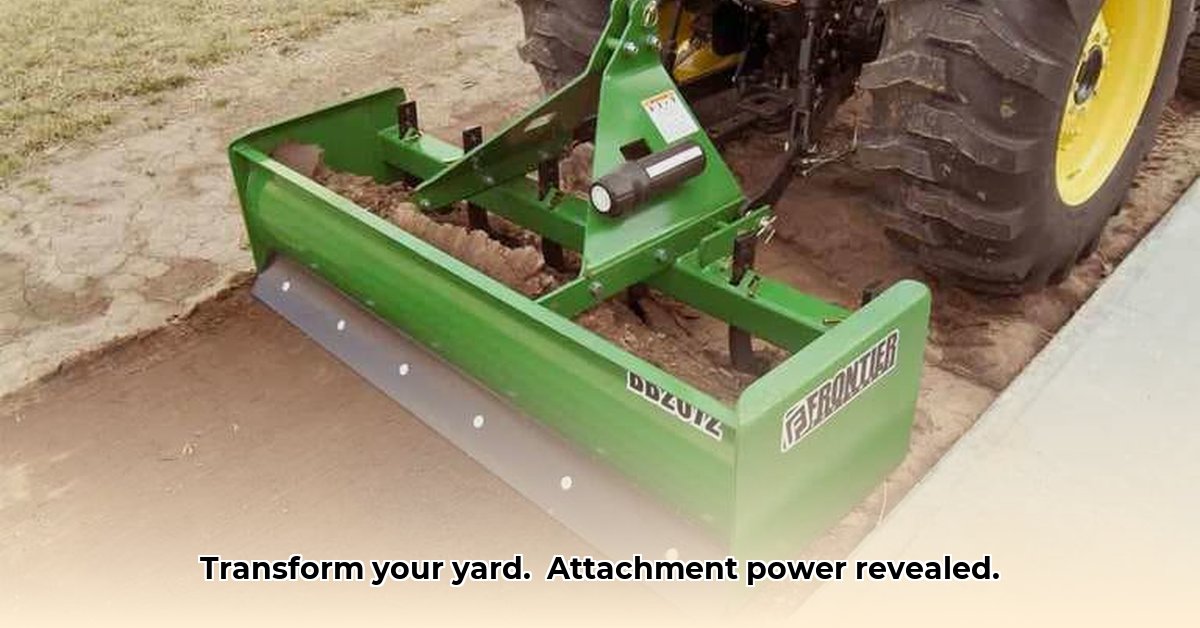
Grading Scrapers and Box Scrapers: Level uneven ground or move topsoil. Size should match the project scale—smaller scrapers for minor adjustments, larger ones for extensive grading.
Snow Removal Equipment: Essential for snowy climates. Snow blowers or blades are sized based on snowfall volume. Heavy-duty snowblowers are best for areas with frequent, heavy snowfall.
Aerators and Dethatchers: Improve lawn health. Aerators relieve compacted soil, while dethatchers remove thatch (dead grass impeding growth). Both contribute to healthier, more vibrant lawns.
Landscape Rakes and Loaders: Efficiently move mulch, gravel, or leaves. Choose attachments based on the weight and volume of materials you handle. Heavier materials necessitate sturdier attachments.
Choosing Wisely: Key Factors for Informed Decisions
Selecting the right attachments involves more than simply knowing what's available. Several critical factors influence your choice:
Tractor Compatibility: Crucial! Verify attachment compatibility with your tractor's lift capacity and mounting system. Consult your tractor's manual to avoid dangerous situations and equipment damage. Ignoring this step can lead to serious consequences.
Quality and Durability: Invest in quality attachments from reputable brands. Look for sturdy construction and durable materials (heavy-duty steel is a positive indicator). Higher upfront costs often translate to long-term savings due to increased longevity.
Safety First: Prioritize safety features, such as shields or guards protecting you from moving parts. Investing in safety is paramount.
Ease of Use and Maintenance: Choose user-friendly attachments with easy maintenance. Easy access to maintenance points saves time and frustration.
Budget: Set a budget before shopping. Compare prices, but remember that the cheapest option isn't always the best. Balance cost with quality and durability.
The Future of Landscaping Attachments: Emerging Trends
The landscape attachment market is dynamic. Key trends to watch include:
Smarter Attachments: Expect GPS integration, sensors, and automation, allowing for precision application of fertilizers or pesticides, minimizing waste and maximizing efficiency.
Eco-Friendly Materials: Manufacturers are increasingly using sustainable materials. While potentially more expensive, this trend supports environmental responsibility.
Modular Designs: Customization and versatility are growing, allowing easier adaptation to various tasks.
Matching Attachments to Your Specific Tasks: A Practical Guide
This table provides guidance on selecting attachments based on common landscaping tasks:
| Task | Recommended Attachment(s) | Considerations |
|---|---|---|
| Mowing | Rotary mower (neat lawns), Flail mower (rough terrain) | Lawn type, desired cut height, terrain conditions |
| Soil Preparation | Tillers, cultivators, plows | Soil type, desired soil texture, depth of tillage |
| Grading/Leveling | Box scraper, grader blade | Terrain conditions, desired level of precision |
| Snow Removal | Snow plow, Snowblower | Snow accumulation, driveway width, power requirements |
| Fertilizing/Seeding | Fertilizer spreader, precision seeder | Fertilizer type, seed type, application rate |
| Aerating/Dethatching | Aerator, dethatcher | Lawn condition, frequency of treatment |
Maintenance and Storage: Extending the Life of Your Attachments
Proper maintenance is essential. Regular cleaning, lubrication, and storage in a dry, protected area extend attachment lifespan. Always consult the manufacturer's instructions. Neglecting maintenance leads to premature wear and tear, resulting in increased replacement costs and potential safety hazards.
Key Takeaways:
- Prioritize Compatibility: Ensure attachments are compatible with your tractor.
- Invest in Durability: Choose high-quality, long-lasting attachments.
- Embrace User-Friendliness: Select easy-to-use and maintain attachments.
This guide provides a solid foundation for selecting the perfect landscaping tractor attachments to meet your needs and transform your yard work. Remember, investing time in research and careful selection pays dividends in efficiency, ease of use, and long-term cost savings.